
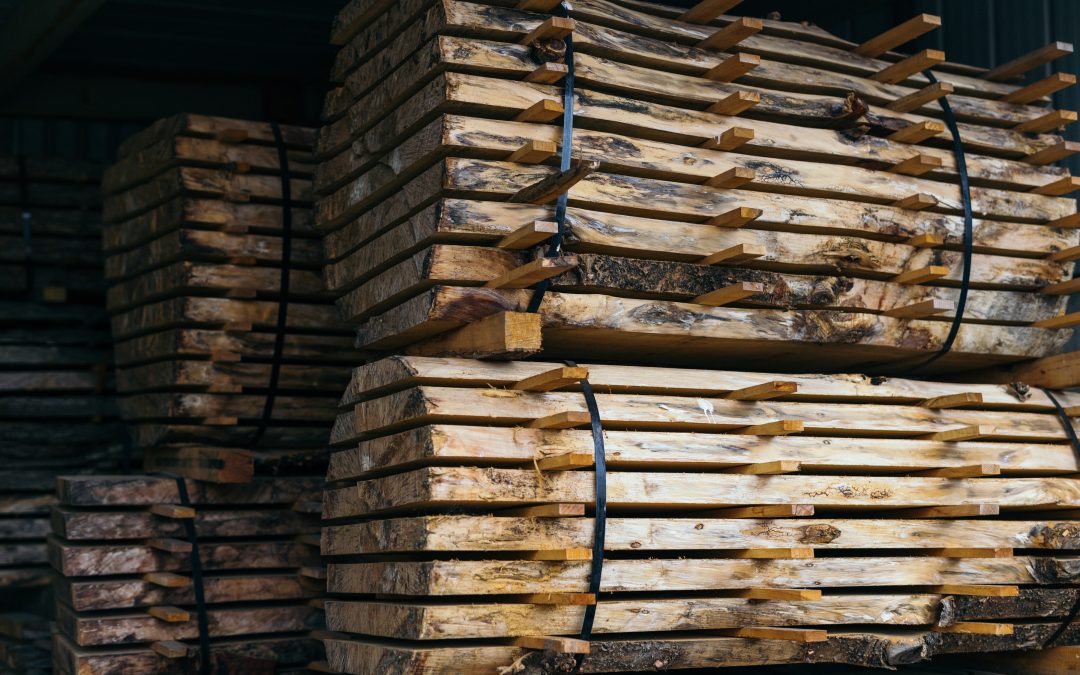
Wood is a material that never goes out of style. This material, which brings harmony and a natural feel to our spaces, is used in floors, walls, and coverings, as well as in furniture or even in decorative details.
From the macro to the micro, wood is always a suitable material.
In recent years, the popularity of this material has given rise to many derivatives, such as laminated wood, or even substitutes that mimic its finish, like synthetic parquet for flooring.
Even so, if we want to bet on quality and sustainability, solid wood is and will always be the favorite option.
But before discovering its advantages, what exactly do we mean by solid wood?
What is solid wood?
By solid wood, we refer to the wood that comes directly from the trunk. Without being sawn or mixed with other substances, nor undergoing any other type of alteration.
This means it is a 100% natural material, used in design and construction exactly as it is extracted from nature itself.
What stands out most about solid wood is its great quality and durability, although, as you can imagine, that also means its price is higher than other solutions.
Types of solid wood
As you can imagine, there are many trees from which solid wood can be extracted, although not all of them offer the same quality or the same final result.
That is why the price and finish of our furniture, flooring, or cladding will depend greatly on the selected wood.
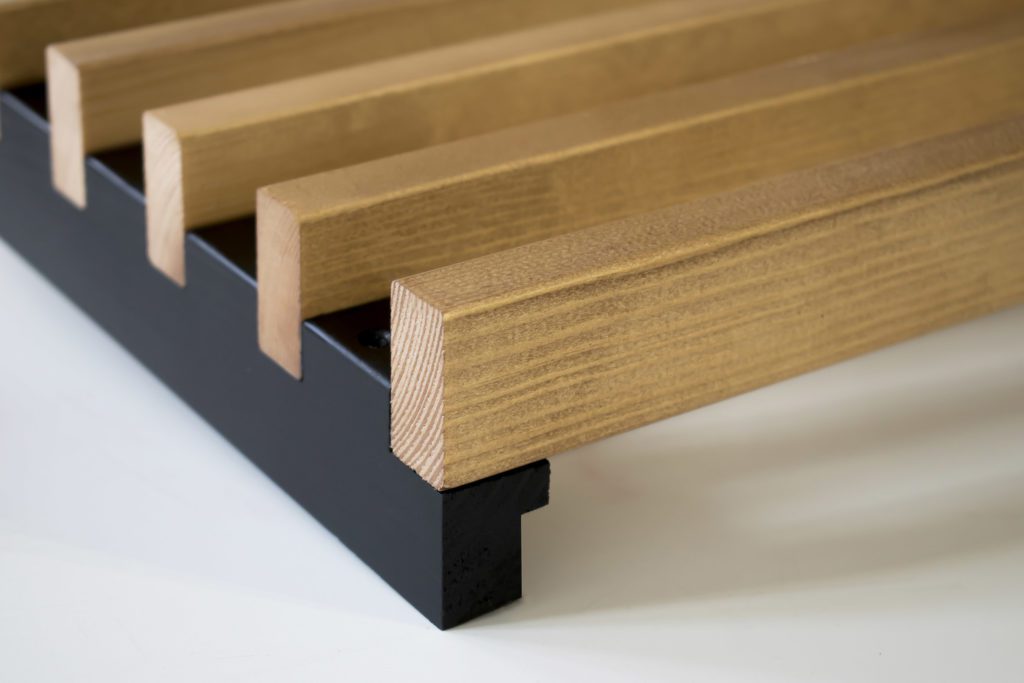
Softwoods and hardwoods
Another factor that affects the final price and the applications given to wood is its ease of working with them. In this sense, there are what we call softwoods and hardwoods.
The fact that some woods are called soft doesn’t mean they are literally soft, but rather that they are woods that are easier to work with. Pine wood and oak wood, for example, would fall into this category.
On the other hand, hardwoods are more resistant and complicated to work with, which justifies a higher price than the previous ones. Among them would be beech, walnut, ash, and cherry.
Most common solid woods
Given the difference between softwoods and hardwoods, we tell you which are the most common solid woods and what their characteristics are:
- Oak: as we have seen, this is a type of softwood and, therefore, easy to work with. It is normally used for finer furniture, wood paneling, or other interior coverings. It can also be used in the manufacture of window frames, doors, flooring, or even shelves. Its finish can be more or less dark, although it always brings a characteristic touch of warmth.
- Pine: its properties are similar to those of oak. It is also a softwood and, therefore, widely used due to its ease of working. Its color is slightly lighter than that of oak.
- Cherry: it is a type of hardwood, widely used in furniture manufacturing due to its great durability and resistance. Its finish has a reddish tone that is highly valued for building furniture such as solid wood tables.
- Walnut: walnut wood is quite stable and dense. Although it is a type of hardwood, it is worked with relative ease and has a dark finish that is highly valued for decorative elements or furniture making.
- Beech: it is one of the hardest woods that exist. In Europe, beech wood is used to make curved-type furniture.
- Woods of tropical origin: all the woods seen previously are usually of European use. However, there are also many woods of tropical origin with different colors and great resistance. You will surely recognize woods such as teak, ebony, bayur or mahogany.
Advantages of solid wood
✔️ Durability: as we have mentioned, solid woods are among the most durable. Thanks to the quality they offer, they can last us a lifetime. That is why, although they may have a slightly higher price than other solutions, it is always a good investment.
✔️ Warmth and naturalness in the finish: although the finishes of wood derivatives and substitutes have evolved in recent years, nothing matches the finish of solid wood. It brings brightness and warmth to any space.
✔️ They improve air quality: as it is a 100% natural material, it does not release toxic particles into the air we breathe, as does happen with synthetic materials.
✔️ They regulate humidity: whether there is excess ambient humidity or the climate is too dry, solid wood materials have a humidity-regulating effect. This makes it an ideal material for bedrooms and other enclosed spaces.
✔️ Simple maintenance: solid wood cladding, flooring, or furniture require minimal maintenance, unlike other types of wood.
✔️ Sustainability: compared to engineered wood, solid wood stands out as a more sustainable solution as it is less processed and does not contain additional products such as glue. This also allows for better recycling of the material.
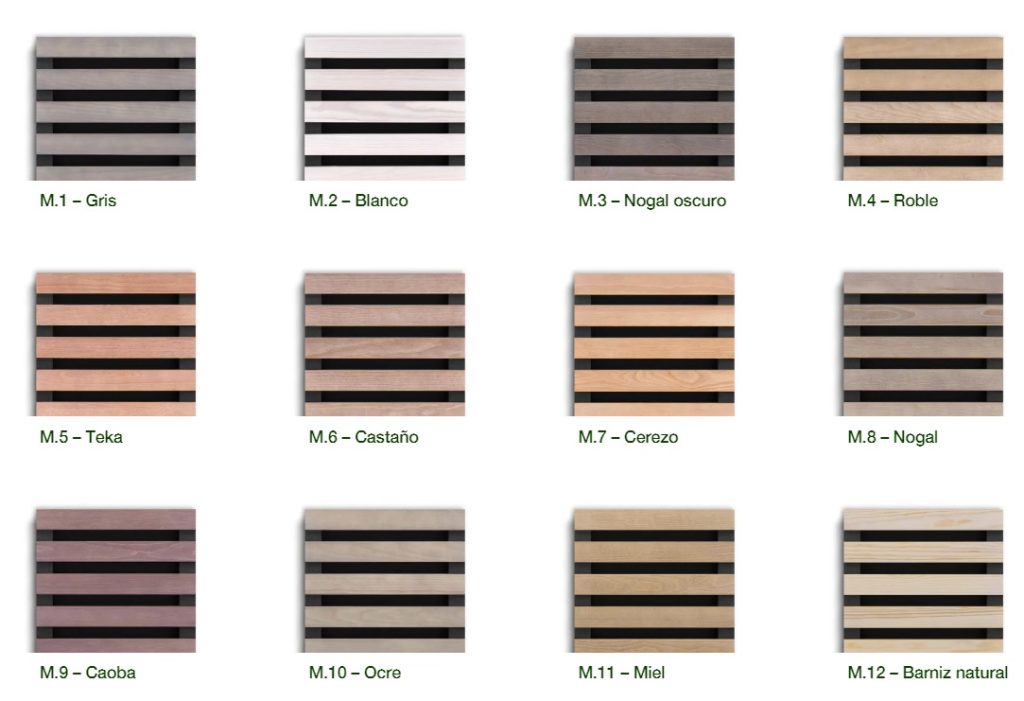
✔️ Variety of woods and finishes: the finishing possibilities of solid wood are practically infinite. On the one hand, because there is a wide variety of woods that can be used and, on the other hand, because even if we opt for one type of wood for its properties, it will be possible to give it the finish we want thanks to varnishes and stains.
Disadvantages of solid wood
❌ Price: as we have already seen, its higher quality justifies a higher price than other solutions.
❌ Harder to work with: solid woods, especially hardwoods, are more difficult to work with than engineered wood. Additionally, their size depends on how thick the tree is.
❌ Less availability on the market: as it is a more expensive material and harder to work with, it is more difficult to find manufacturers who work with solid wood, since this requires great expertise.
Why do we use solid wood in our panels?
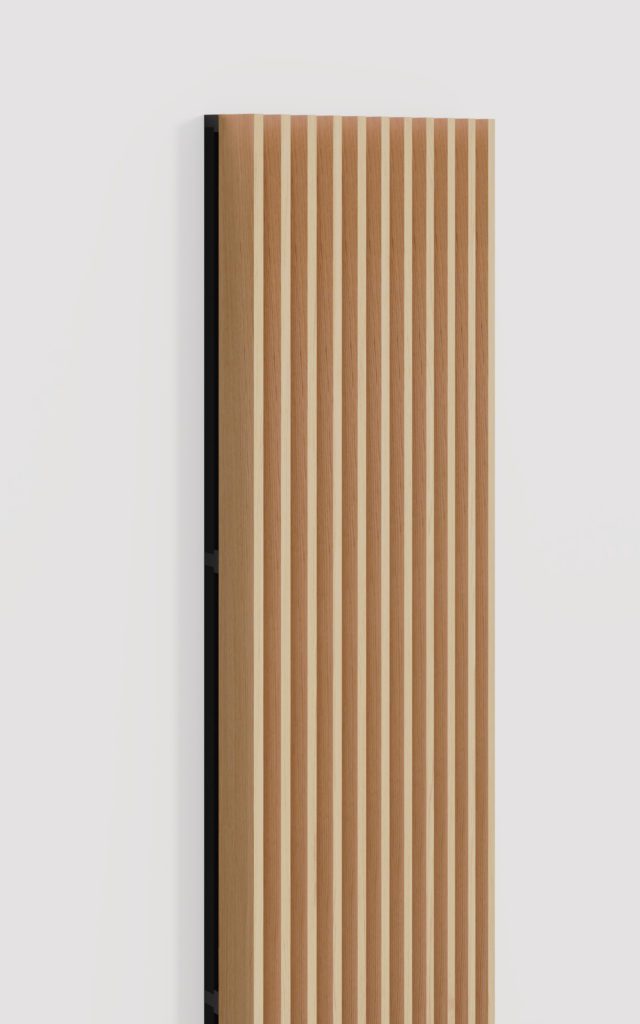
At Woodslines, all our panels are made from solid pine or oak wood. Here are the reasons why:
✔️ Commitment to nature: commitment to the environment is one of our fundamental pillars. And this responsibility begins with the choice of raw materials. As we have explained throughout this article, solid wood is a more sustainable material than synthetic wood or other solutions and, therefore, better aligns with our values.
✔️ Commit to quality: in a context of globalization in which international competition can be a threat to the local industrial fabric, we have always been clear that our best differentiation is a firm commitment to quality.
✔️ Market needs: we are attentive to the constant changes in market needs and we have realized that architects and designers are increasingly demanding natural and sustainable solutions. Due to the difficulty of working with solid wood and its higher price, there are few manufacturers that offer products made from this material, and that is where we thought we had something to contribute.
We hope this article has helped you learn a little more about this natural material. If you have any questions, don’t hesitate to contact us through the link below.