
Black noise. This is what we call the infrasound emitted by machines or vehicles when they are in operation.
The peculiarity of black noise is that its origin is not usually found in nature: it is a 100% artificial type of sound.
What we need to know is that our internal organs absorb its vibration or energy. And although the effects of this absorption remain, to a large extent, unknown to science, some studies are beginning to shed some light on this issue.
But before getting into the subject, the following question may arise:
What exactly are infrasounds?
Depending on their frequency, acoustic waves are classified into infrasound, audible sound, and ultrasound.
This frequency is measured in hertz and is defined as the number of cycles or pressure changes that occur each second of time.
As you can see in image a, more pressure changes per second, the higher-pitched the sound.
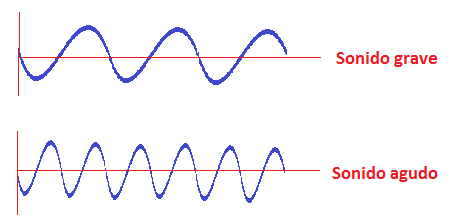
As for infrasound, these are acoustic waves whose frequency is lower than 20 hertz, which makes them imperceptible to the human ear.
Although they fall below the threshold of hearing, these infrasonic waves produce contractions and dilations in matter, which includes the particles of our body.
Even so, some people detect these waves in a subtle way and describe it as a type of harsh sound, a bursting sensation, a feeling of pressure on the eardrums and other types of physiological and psychological sensations that are described as unpleasant.
What is the origin of black noise? What produces it?
The information that black noise is produced exclusively artificially is inaccurate: in reality, our own body generates a small amount of black noise during breathing, heartbeat, or coughing.
What is not found in nature is the exposure that certain devices, machinery, and vehicles around us can cause.
The same household appliances found in most homes emit black noise while they are operating. So do the ventilation and cooling systems of large stores and commercial establishments, the machines in certain work environments, and wind turbines.
Regarding this last point, some studies indicate that there is sufficient evidence to affirm that the black noise from wind turbines can negatively affect the physical and mental health of people who live nearby. But what exactly are these negative effects we are talking about?

What effects can black noise have on people?
The frequency of infrasonic waves coincides with certain biological resonance frequencies of the internal organs of human beings, such as the lungs, the heart, the diaphragm and, above all, the central nervous system.
Among its effects is the fact that these waves can cause the cells of our organs to oscillate, even leading to an increase in temperature in our body.
❌ Myth: “what you can’t hear can’t hurt you”
We continue with the mistaken idea that what we cannot hear cannot harm us. And the fact is that human beings find it hard to believe in what they cannot see, hear, or touch.
In fact, many acoustics specialists still tend to perpetuate the idea that, when used correctly, hearing protectors are sufficient. But this is only true if these protectors are properly prepared for the type of sound we worry about the least and that has the greatest impact: black noise.
In fact, and although we may not do it consciously, our body will feel that it must move away from the place where we are receiving this unwanted energy. This means that we will never come to feel relaxed and comfortable in an environment where black noise is present.
Lately, evidence has been found that high-intensity infrasound could damage the axons of neurons. Other scientific articles also attribute loss of concentration and sleep disturbances to them.
Black noise in the work environment
Other studies do not rule out the possibility of less frequent symptoms such as hearing loss, vertigo, or balance problems. In fact, agricultural vehicle drivers report a decrease in alertness and visual acuity.

For their part, truck drivers talk about fatigue, dizziness and headaches, something that is not hard to understand, since many of us have experienced the irritation, tiredness, confusion and slight hearing loss resulting from a long car trip. Of course, in this case, these are transient symptoms that disappear after resting.
Workers who are in contact with industrial machinery claim to end up perceiving a constant humming, pressure in the ears, a sensation of perceiving a distant motor, and problems reading, sleeping, stress, aggressiveness, and fatigue.
What can we do to protect ourselves from black noise?
As you may have gathered, the level of danger depends on the level of exposure and intensity. While the presence of some household appliances shouldn’t alarm us, it is advisable to take the necessary measures if you live or work in an environment with a high level of black noise.
The truth is that, many times, noises are so integrated into our daily life, and especially in the natural environment, that we consider them normal and unavoidable. Although, as we already saw in this article, noise is one of the greatest sources of work-related stress and one of the main causes of decreased performance.
Not only that, but in Europe, the social cost of noise is estimated to range between €30 billion and €40 billion annually. In addition, 10,000 Europeans die each year from causes related to noise pollution.
When the noise comes from within
The solutions to protect ourselves from noise will depend, in any case, on the location of the source.
One of the most dangerous situations in this regard are those work environments where heavy machinery is constantly in operation.
To alleviate part of the noise pollution, it is advisable to turn to solutions that increase acoustic absorption. In this way, the noise generated in an enclosed environment would be partially absorbed by the acoustic materials present, such as glass wool or rock wool.

When the noise comes from outside
In those cases where black noise comes from the outside, such as homes located near wind turbines or in high-traffic areas, the solution involves insulating the space from external noise.
Rock wool and glass wool remain equally valid solutions, although you can also turn to structural insulation used in construction, such as soundproof windows, walls, acoustic doors and other elements that decouple the structure and reduce vibrations.
Protect your team’s health and their performance at work
While it is true that there is legislation that limits the maximum permissible exposure levels for occupational noise, we still have a long way to go. One of the reasons is the one already mentioned: we tend to focus on audible noise levels and neglect the effects of infrasound.
✅ Recognize to prevent, prevent to improve
At Woodslines, we encourage those productive companies that use heavy machinery to take care of their work environments and protect their workers.
There are many solutions on the market, such as Woodslines panels with integrated rock wool, which perfectly combine acoustic comfort with an aesthetic result.