
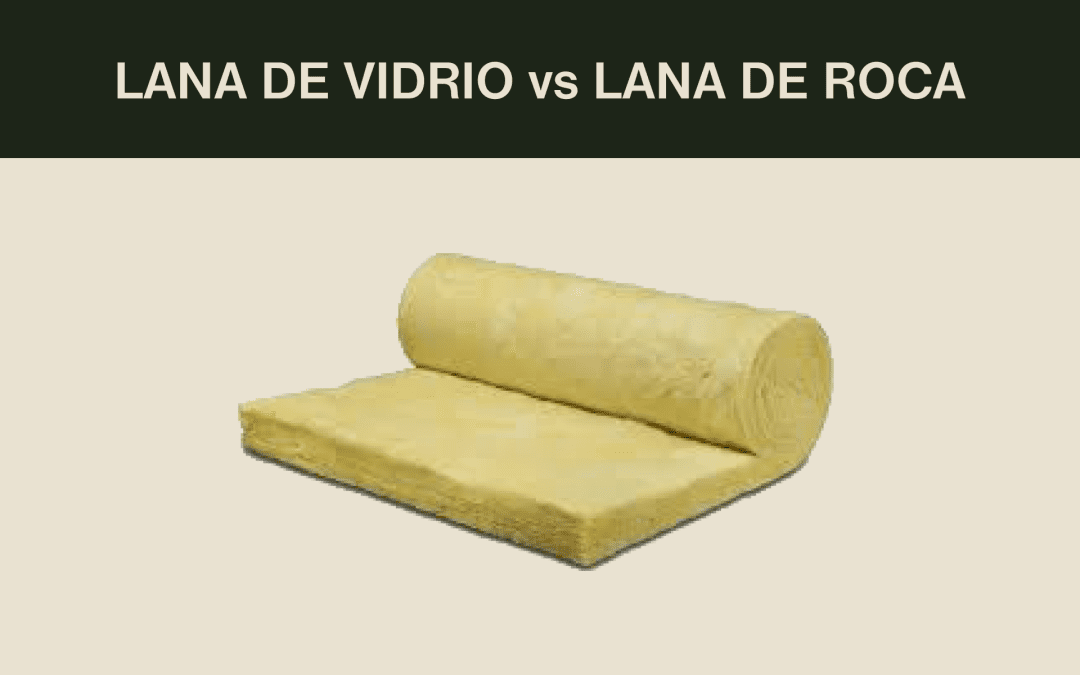
If you need to improve the acoustic or even thermal insulation of your home, you will have discovered that there are two materials used in most cases: glass wool and mineral rock wool.
Sometimes, the choice of one or the other will be determined by the nature of the renovation or work to be carried out. Walls, ceilings, floors, interior, exterior… there are many factors that can determine the suitability of a specific material.
What is clear in any case is the importance of having a material with high thermal resistance, a strong ability to absorb sound, and good fire resistance. And when it comes to these characteristics, both glass wool and rock wool are powerful allies.
So, what really sets them apart?
If you’ve ever asked yourself this question, join us throughout this article and finally clear up your doubts. Shall we begin?
Glass wool and rock wool: What is their composition and how are they manufactured?
Glass wool is mainly composed of sand, soda ash, limestone, and recycled glass. This last ingredient is what gives it its name.
Raw materials are stored in silos and poured into electric furnaces for melting at over 1400ºC.
Through a feeder, the glass will then flow to the fiber-forming machine, which consists of a centrifugal spinning wheel that rotates around a vertical axis.
The band of this spinning wheel is then perforated with multiple holes and the glass, pushed centrifugally through them, will divide into the fibers needed for the creation of glass wool.
Impregnated with resin, these fibers are then taken through a curing process in the oven, where they will acquire their pressed format that will be cut by circular saws or water jets at the exit.

For its part, rock wool comes from volcanic basaltic rocks that, treated in a similar way to glass, are turned into fine threads or fibers that are packed into blocks, rolls, or slabs.
The materials used are, therefore, minerals, such as basalt or gabbro, recycled materials, such as remnants of rock wool or bricks and, finally, a small percentage of binders.
Its manufacturing process reproduces what happens inside a volcano, since rock wool originates in Hawaii, after the volcanic eruption on the islands.
For its manufacture, volcanic rock is melted at temperatures above 1600ºC and transformed through a process very similar to that of glass wool using automated technologies.
Except for the format and the materials used, the differences between both materials are not very noticeable. They have similar properties that, as we have mentioned, are valued according to the home’s infrastructure, the surroundings, or even the budget. Let’s take a closer look.
Properties of glass wool and rock wool: similarities and differences
1. Thermal resistance🌡
Both glass wool and rock wool offer very good thermal resistance.
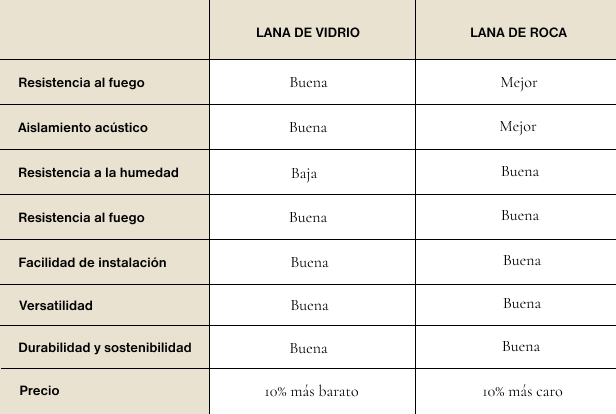
Even so, rock wool offers slightly higher effectiveness than glass wool. In other words: it will prove slightly more effective at preventing a building’s heat loss due to conduction.
2. Sound insulation and absorption 🔊
And what about acoustic insulation?
Once again, both materials offer high efficiency in this regard, although rock wool is preferable because its density is higher than that of fiberglass.
On the other hand, rock wool is also more effective at absorbing sound waves and reverberations.
That is why it is a more suitable solution when the goal is to correct sound absorption. In this article, we explained the difference between acoustic absorption and insulation.
3. Moisture Resistance 💦
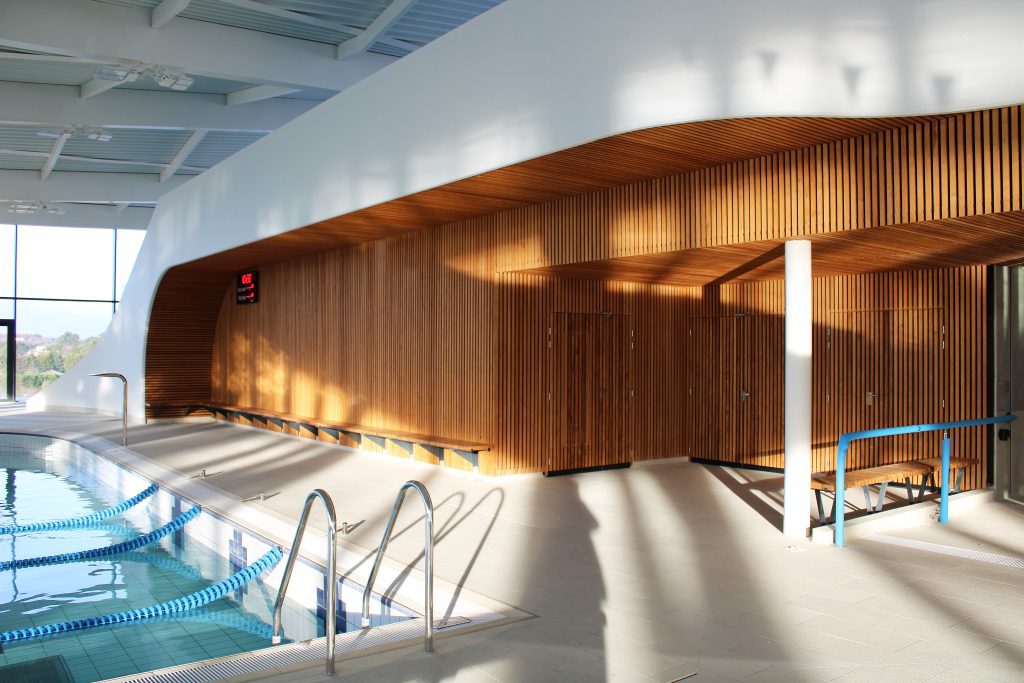
In this respect, we can say that rock wool obtains a clear advantage due to its water-repellent properties. By not getting damp, this material prevents the appearance of fungi, mold, or other bacterial sources.
Its application is therefore perfect for projects such as an indoor pool, as you can see in this pool in Saint Paul Les 3 Chateaux in Montélimar, France, which was renovated with our acoustic wood panels with rock wool.
By not having this water-repellent property, glass wool loses its insulating property when in contact with water.
4. Fire Resistance 🔥
As we already told you, both mineral wool and glass wool are non-combustible or fireproof, which means they withstand high temperatures.
In fact, both materials are classified as A1, which means they are non-combustible and do not contribute to fire in any way.
In the event of a fire, these materials will slow down and limit the spread of the flames without generating smoke or harmful gases. Passive protection that provides greater safety.
5. Versatility
Both types of wool can be found in a wide variety of products or formats: blankets, rolls, in bulk… the options are endless.
In addition, both materials can be adapted to almost any use, such as facades, roofs, walls or floors.
Although, as we have seen, some applications make rock wool more suitable, mainly due to its water-repellent properties that make it a suitable material in environments designed to accommodate a certain degree of humidity.
6. Installation 🔨
We’ll tell you up front: on this point, there are mixed opinions.
Some opinions argue that fiberglass is easier to install because it is more manageable and adapts better to any surface.
On the other hand, some argue that rock wool is easier to install due to its greater weight.
In any case, neither of the two materials is particularly complicated to install. As you can see, the differences in criteria are more a matter of personal preference.
7. Durability and sustainability ♻️
As for durability, you can rest assured: both wools remain intact for decades, and that without any of their properties being diminished.
In addition to their durability, which helps extend the product’s lifespan, the sustainability of both solutions comes from the fact that they are made from recycled materials, as we saw in their composition.
Other factors that make them sustainable materials are their ability to be recycled and their safety for human health. In 2001, the International Agency for Research on Cancer (IARC) classified glass wool and rock wool as non-carcinogenic materials for humans.
8. Price 💰
This is a criterion that should not be overlooked. The budget for a project is usually a factor to consider, especially when it comes to covering large surfaces.
It is true that there is a slight price difference between the two materials: glass wool can be up to 10% cheaper than rock wool.
Even so, we believe it is important to contextualize this small price difference by reviewing the added advantages of rock wool compared to rock wool.
Conclusions
So, is glass wool or rock wool better?
In short: both products are very efficient solutions when it comes to improving the thermal and acoustic insulation of your home.
In both cases, we are talking about flexible materials that have the ability to adapt to almost any surface, with the added benefit of being sustainable and durable solutions over time.
Choosing one or the other will depend on subtle nuances where personal preferences will frequently come into play.